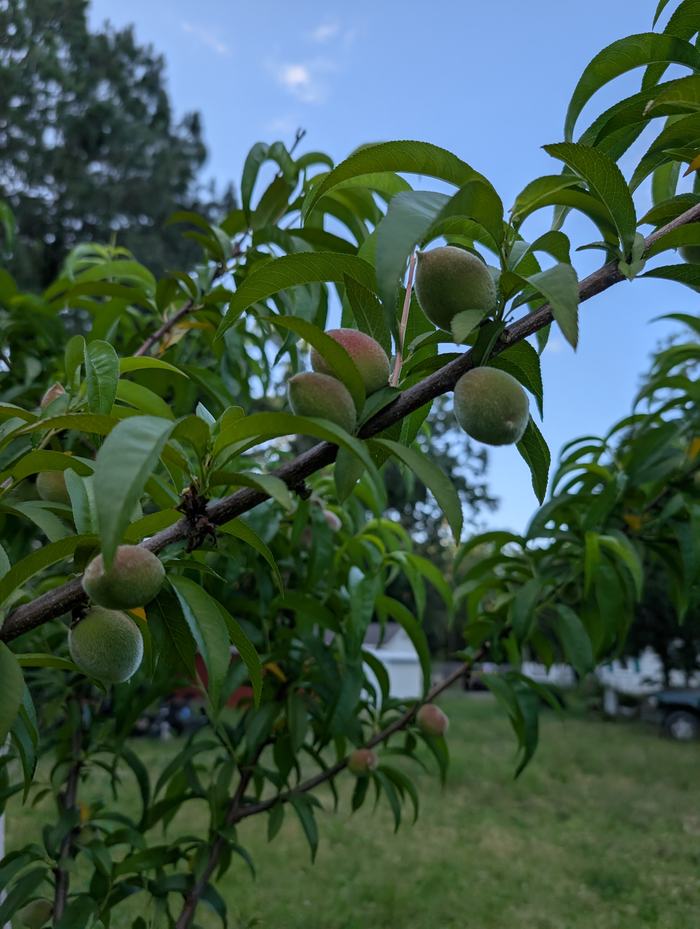
Fruit trees need their fruit thinned to help maximize production. These fruit are too close together and too numerous for the fruit to be the best they can be. Photo by Amanda Bratcher
If you look at your fruit trees this week and see clusters of peaches or apples along the branches of your trees, it is time to act. While it feels wrong to remove potential food, "thinning" your fruit is the single most important task you can do, and if you haven’t done it, this month is the time to do it to ensure a high-quality harvest and a healthy tree.
Why Thin? Quality Over Quantity
A tree has a finite amount of energy (carbohydrates). If it tries to feed 500 peaches, you’ll probably end up with 500 golf balls that are mostly pit and very little sugar. If you thin that same tree down to 100 peaches, the tree funnels all its energy into those remaining fruits, giving you larger and juicier fruit.
Beyond the flavor, thinning prevents two major issues when it comes to fruit trees: limb breakage and biennial bearing. A heavy fruit load can literally snap large structural branches. A broken limb is an open door for wood-rotting fungi and can permanently disfigure your tree. It takes energy to make babies, as I like to say; and if a tree overproduces one year, it could reduce production the following year. Thinning keeps the tree on a consistent, healthy cycle.
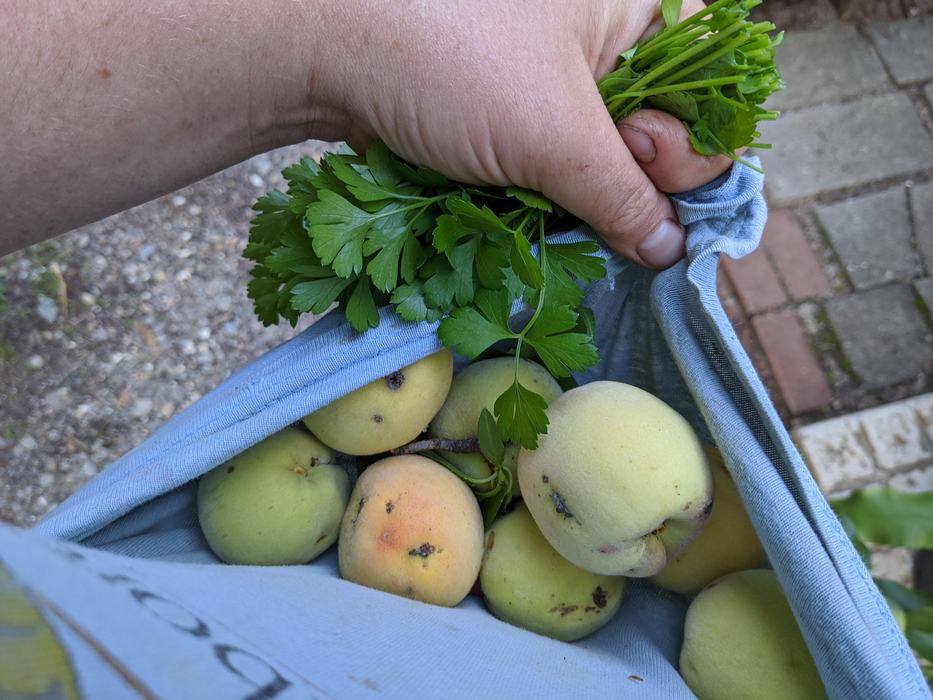
These fruits have insect damage on them, which was caused weeks ago by piercing sucking insects. It is only now as the fruits have swollen that the damage is amplified. These were culled during the thinning process. Photo by Amanda Bratcher
When to Thin: The "June Drop"
Most trees will naturally shed some fruit in late May or early June—this is called the "June Drop." It’s the tree’s way of saying, "I can't handle all this!" Once the tree has done its initial shed, it’s your turn to finish the job. You want to thin when the fruit is about the size of a large marble or golf balll.
How to Thin: The Rule of Thumb
For most home orchard species in North Carolina, the 6-inch rule is your best guide.
Peaches and Nectarines: Space fruit 6 to 8 inches apart on the branch. If a branch is particularly thin, leave only one or two fruits total.
Apples and Pears: These often grow in clusters of 3 to 5. Remove all but the largest fruit in each cluster. Aim for about 6 inches between clusters.
Pro-Tip: Always remove the fruits that are scarred, misshapen, or already showing signs of insect damage. This allows the tree to focus on the most promising fruit.
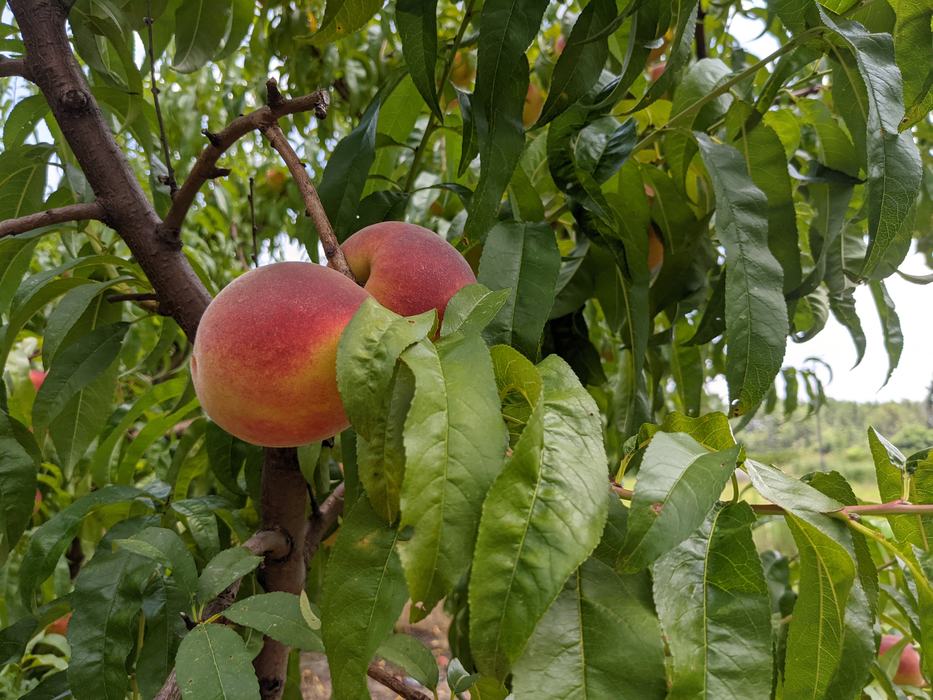
These peaches are ripe and ready for picking! Peaches taste best when they are thinned out so the energy from the plant can be concentrated in fewer fruits. Photo by Amanda Bratcher
Top Summer Orchard Management Tips for NC
Thinning isn't the only thing on the to-do list as we head into the sweltering Central North Carolina summer. Here are a few more ways to keep your orchard thriving.
Sanitation is key to the long term success of your trees, especially when it comes to members of the Rose Family. If you see rotted or mummified fruit on the tree or the ground, pick it up and throw it in the trash! Leaving it under or near the tree provides a nursery for diseases like Brown Rot or pests like Plum Curculio to hang out until next year.
Fruit is mostly water, so if you want a good fruit set, you need to provide irrigation during a drought. If we have a dry spell in June or July, your tree will pull moisture out of the fruit to keep its leaves alive, resulting in shriveled harvests. Provide deep, weekly watering for young or heavily-laden trees. About an inch of water a week, or about 0.62 gallons per square foot of area under the dripline of your trees.
Keep a wide ring of mulch around the base of your trees. This prevents "lawnmower blight" (hitting the trunk with a mower) and keeps the roots cool and moist. Don’t pile the mulch up against the tree though! Make sure to keep weeds away from the trunk, to maintain airflow and reduce habitat for detrimental insects.
Finally, keep an eye out for "oozing" on peaches or "frass" (insect poop) on apples. Catching an insect infestation or disease early can save the whole crop, and the tree for years to come.
Let’s Grow Together
It might feel like you’re throwing away your hard work, but I promise your trees will thank you with the best-tasting fruit you’ve ever grown. If you’re unsure if you’ve thinned enough, come by the Extension Office and show us a photo—we’re happy to help you make the cut!
Contact NC Cooperative Extension—Lee County Center
Amanda Bratcher is the horticulture agent with N.C. Cooperative Extension- Lee County Center. You can reach out to the office at 919-775-5624 for more information or questions regarding this article, but also any other questions about your garden, farm, land or plants! We’re here to help! You can check out our website's events page for more information and to register for upcoming programs.