March is famous for coming in like a lion and going out like a lamb, but in Lee County, it often feels like it can’t decide whether it wants to be arctic or tropical. This "weather whiplash" is challenging for plants because their responses are governed by physics and chemistry. Unlike humans, who can simply take off a coat when it gets warm, plants have a physiological lag time. This gap between experiencing a freeze and showing the symptoms is why your plants might look fine in April but perish in July.
Winter Damage in the Summer?
The Biology of the "Anti-Freeze"
To survive winter, plants go into dormancy—a state of reduced photosynthesis and transpiration. At the cellular level, plants prepare by moving water out of their cells and increasing the concentration of sugars and salts. This acts as a natural biological anti-freeze, lowering the temperature at which the plant’s "insides" will actually freeze.
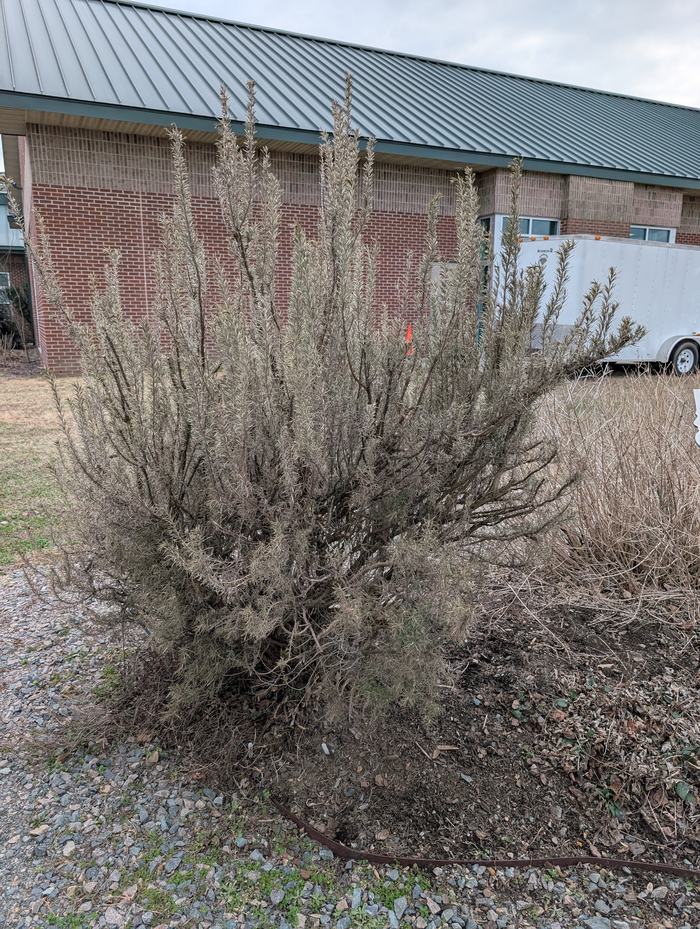
This rosemary plant in the Pollinator Haven Garden experienced winter desiccation, due to it being an evergreen plant and it being exposed to harsh North winds. The needle-like leaves have died, but there is still some green left in the center. Photo by Amanda Bratcher
The Freeze-Thaw Whiplash
The danger arises when we have a warm spell in late February or March. The plant senses the "tropical" vibes, sap begins to flow, and it begins to de-acclimate to the cold. If a sudden "arctic" blast follows there are a couple things that happen to the plant. Water that has moved back into the cells can freeze rapidly. Because water expands when it freezes, it can literally burst the cell walls. This causes cell death. The plant's "pipes"—specifically the xylem, which carries water from the roots to the leaves—can be damaged or blocked by air bubbles (embolisms) caused by the freeze, because water cannot move through the air. Plants are managed by internal turgor pressure and a ruptured cell wall or break in the vascular system is like a leak to the system.
Why the Damage Shows Up in July
This is a great mystery for many gardeners. A plant may have enough functioning "plumbing" to push out leaves in the cool, moist spring. However, when the 90°F days of summer arrive, the plant’s demand for water skyrockets as transpiration increases.
If the vascular system was compromised in March, it simply cannot move water fast enough to keep up with the summer heat. The plant then suffers a sudden "collapse"—leaves turn brown almost overnight, or entire branches die back. This isn't a new disease; it’s the ghost of the winter past.
What Can You Do to Help Your Plants?
Prevention is the best medicine, as we cannot "heal" ruptured plant cells once the damage is done.
A good place to start is to make sure plants are well-watered before a freeze. Moist soil stays warmer than dry soil and radiates heat upward. Furthermore, a well-hydrated plant is more resilient to the drying effects of cold winter winds.
Be aware of where plants are located in the landscape, as some aspects and exposures make plants more susceptible to winter damage. Protect evergreens from southern or southwestern exposures. The "winter sun" can warm up the bark of a tree on a freezing day, causing the sap to flow, only for it to freeze instantly when the sun goes down (a condition called sunscald). For young fruit trees, applying white indoor latex paint (diluted 50/50 with water) to the trunk helps reflect that winter sun and prevents the bark from overheating.
Finally, reduce maintenance to your plants as we move into the fall. Do not prune or apply nitrogen-heavy fertilizer in the late fall. This encourages new, tender growth that hasn't had time to "harden off" before the first frost and can make plants more susceptible to damage.
What to Look for This Summer
If you suspect winter injury, keep a close eye on your plants as the heat rises. There are a few symptoms to look for. Some branches may leaf out much later than others. There may be marginal leaf scorch, where the edges of the leaves turn brown, or whole sections of the plant can die back, because the "plumbing" can't get water to the very tips. There can also be dark, sunken areas on the bark where the tissue died during the winter.
Patience is key. Don’t be too quick to act, unless a plant is physically broken. Let a plant leaf out into the spring and early summer before pruning to reduce more stress to the plant. Once the summer is underway, depending on the severity of the damage, sometimes cutting the damaged or sections that have died back and giving the plant supplemental water through the scorching summer sun can help get it through.
However, if this damage is occurring year after year, it may be time to consider removing and replacing the plant with a more climate resilient option. Damaged plants are more susceptible to pests and diseases, and this can lead to secondary issues in your landscape. Just know, there is a plant for every place and sometimes the best plant isn’t the one that was there before.
Contact NC Cooperative Extension- Lee County Center
Amanda Bratcher is the horticulture agent with N.C. Cooperative Extension- Lee County Center. You can reach out to the office at 919-775-5624 for more information or questions regarding this article, but also any other questions about your garden, farm, land or plants! We’re here to help! You can check out our website's events page for more information and to register for upcoming programs.
This article originally appeared in The Sanford Herald. You can read more articles from the Herald here.
Resources
Extension Gardener Handbook Section on Abiotic Disorders
Cold Damage Article from Clemson Extension
Cold Protention for Ornamentals from UFAS Extension
Morton Arboretum Winter and Cold Injury in Trees and Shrubs
Winter Desiccation Damage to Evergreens OSU Extension
Winter Damage on Landscape Plants University of Maryland Extension
Winter Injuries on Landscape Plants from Bartlett Tree Experts
Fall and Early Winter Chores for Winter Injury Reduction from Cornell Extension
Join our mailing list!
Enter your email address to receive updates.
Written By