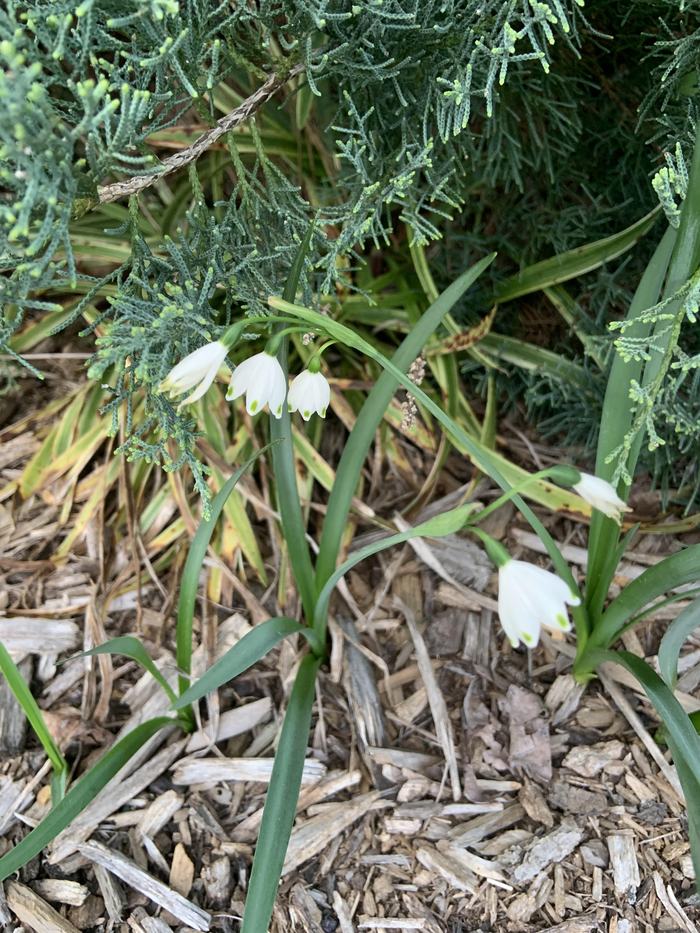
Sometimes a name just fits, doesn't it? Snowdrop, Galanthus nivalis, is a small perennial bulb that blooms in late winter and early spring during the months most likely to have snow. Native to Europe and southwestern Asia, it has become naturalized in parts of the U.S. including areas in The Old North State.
Snowdrops range in height from 3 to 8 inches tall and bear a solitary white, bell-shaped flower. The bloom has three outer petals arching over three inner petals and hangs like a drop from a slender stem. There is also a double-flowered variety. Because of its low level toxic nature, plants are not usually browsed by deer or rabbits.
Like most spring-flowering bulbs, snowdrops are best planted in the fall. Check with your local nursery or garden center for availability as they do not store well over long periods of time. Locate in areas with full sun or part shade. Although they are dormant during summer months, they will benefit from protection from full sun during the hottest part of the day. Choose a site with good drainage and plenty of organic matter or plant in raised beds. Individual plants will not have the visual impact that planting in groups will have. They are compact and slow to get established. Their seeds require temperatures below 20°F to germinate, so they may be short-lived in warmer climates.
A member of the Amaryllidaceae (onion) family, snowdrops spread by self-seeding and by producing bulb offsets, meaning new bulbs develop attached to mother