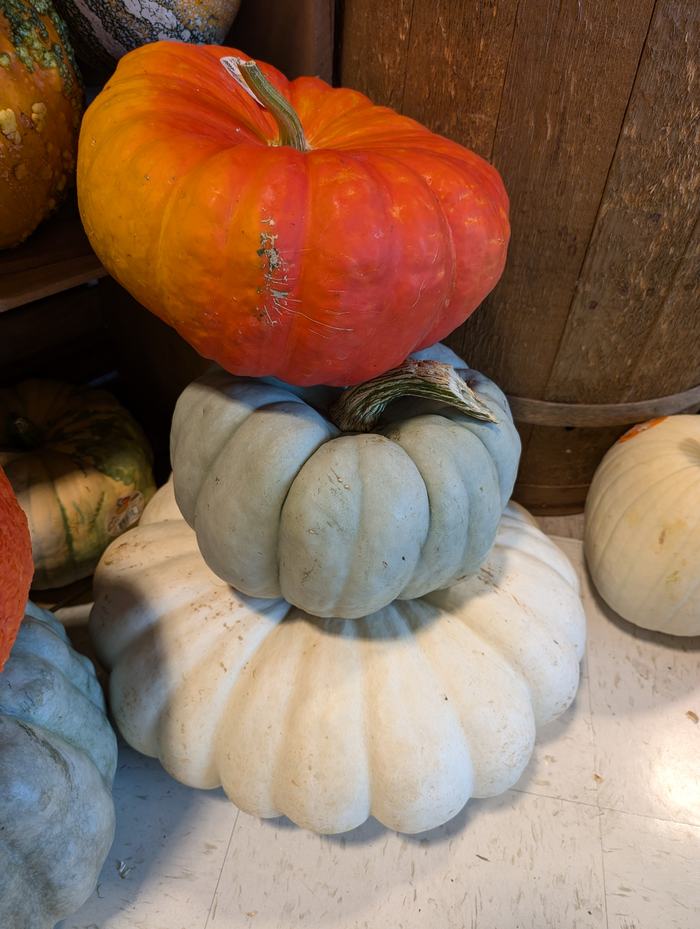
Fall decoration themes include natural and agricultural elements in our modern times. There is something innate that makes us want to bring warmth and beauty indoors as the weather turns colder. Warm maple leaves embellish everything; dried corn stalks lean in every corner; and pumpkins come out of the woodwork, sometimes literally. There is pumpkin everything; but we seem to overlook why pumpkins have been such successful decorations: they are store well. This makes them the perfect decoration, but also the perfect food!
What are stackable pumpkins
The pumpkins that we see stacked at grocery stores and roadside stands are made up of flat-fruited varieties that have been cultivated by humans for hundreds or thousands of years. The motif is a “natural” take on the fake stacked pumpkins you can get at any seasonal display at big box stores. They seem to have made a resurgence in the last decade; not because we think they taste good, but because they are especially decorative.
Many of the “stackables” are heirloom varieties, like: ‘Musquee de Provence’, the Cinderella pumpkin; ‘Jarrahdale’, a blue-skinned variety; ‘Rouge Vif D'Etampes’, with its bright orange skin; and ‘Galeux d'Eysines’, the warty conversation piece. These are just a handful. There are dozens of varieties that come in a variety of colors, shapes and sizes. Most of these varieties are excellent for cooking and storing.
Helping your stackable pumpkins last
Start your decoration or pumpkins selection by selecting pumpkins without cracks or damage to the rinds. Any knick or cut is a way bacteria and fungi can get in to start the decomposition process. You can gently wash the surface of a pumpkin with a weak bleach solution to prolong the shelf or decoration life of the pumpkins. Keep the pumpkins out of the rain and reduce the amount of direct sunlight they get.
When shouldn’t I eat my stackable pumpkins?