This article was written by Gail Griffin, Extension Master Gardener Volunteer with North Carolina Cooperative Extension in Lee County.
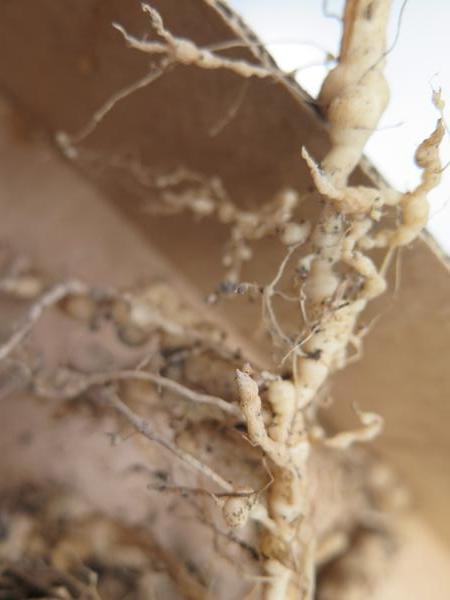
Sounds bad, doesn't it? Could be, especially if you're planning to have a vegetable garden again this year. Root knot nematodes are microscopic roundworms that live in the soil. In North Carolina, the southern root knot nematode is the most common, although other types have also been detected. They pierce roots of certain plants and lay their eggs resulting in "knotty" growths and galls along the root system which can be evident by examining the roots of suspected plants.
Root knot nematodes have what is considered a broad host range. They are not limited to vegetables. In our state, they are estimated to be in two thirds of fields used for crops. Some nematodes are known to affect crops from sweet potatoes
to soybeans. Fruit trees, ornamentals and even weeds are not immune. Crops that grow above ground and below ground can be susceptible. In vegetable gardens, plants grown in soil temperatures between 70-85°F can be affected. These include, but are not limited to, beets, carrots, tomatoes, peppers, cucumbers and squash. Infected plants become stunted or wilted, yellowed and unproductive as the nematode prevents nutrients from being transported from the roots throughout the plant. Once these parasites enter the root system, they will remain there for their life cycle.
To help reduce build-up of nematodes in the soil, several preventative measures can be used. Crop rotation is the practice of not growing a susceptible host (crop) in the same site year after year. Farmers have used this method for years. Rotating these areas with non-host plants such as winter rye or fescue will limit populations of nematodes. Use of resistant varieties of vegetables is another effective method of control. Alternating resistant and non-resistant
varieties can help prevent build-up as long as the same vegetable is not planted in the same site.
After harvest, remove the roots as completely as possible and till the soil two to three times. Tilling the garden site in fall brings nematodes to the surface and subjects them to sun and drying winds. Planting a winter cover crop with wheat or annual ryegrass will help further reduce nematode levels and keep the soil in healthy condition. Incorporating organic matter like grass clippings and composted leaves into the garden will increase the soil's fertility and ability to retain moisture and encourage biological control of nematodes.
If you suspect you have had problems with nematodes in years past, use of these control methods won't totally eradicate them, but may help reduce them to manageable levels without devastating the garden you've worked so hard on. Bless your heart.
Gail Griffin is an Extension Master Gardener Volunteer with North Carolina Cooperative Extension in Lee County.