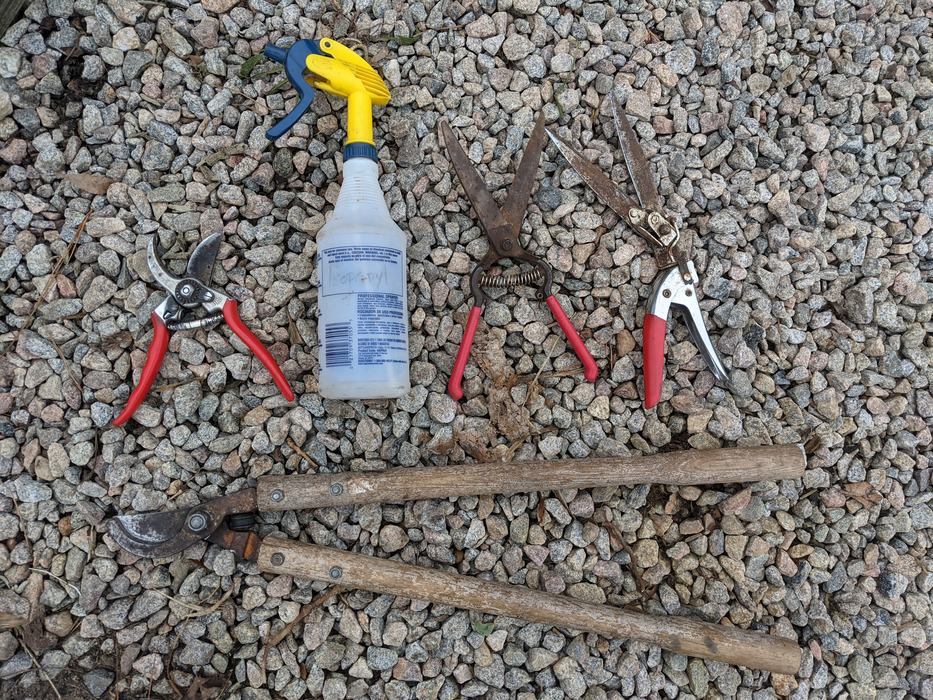
Pruning is one of the most important tenants of garden maintenance and it causes the most anxiety among gardeners. They wonder: ‘is it the right time?’, ‘is this too much?’, ‘should I even prune this?’.
There are some quick go-to times to plan your pruning by.
Winter Foliage and Spring Cleaning
Once the threat of hard freezes has passed, it is okay to cut back the dead foliage of last season’s perennials and the winter-bitten foliage of trees and shrubs. I encourage gardeners to leave the dead foliage of perennials over the winter because this foliage protects the crown, or growing tip, of the plant through the cold, desiccating weather of winter. It is important to be patient because if we get one more cold snap before the end of “winter”, especially after the spurts of warm weather we usually experience, you may have more damage in your garden. Even if the foliage is dead, it can still add an aspect of interest through the winter and provides hiding places for insects and birds!
Timing Your Pruning
I wish it was as easy as giving some quick advice when it comes to pruning. I really do. Unfortunately, it is a fairly complicated business and if not understood properly can forever sentence you to a life without flowers in your garden. Who out there has a mophead or lacecap Hydrangea that “never blooms”? Yep, I thought so.
A few tips though:
Timing is everything! Make sure(!) you know what species of plant you have before you go after it with the shears. Get to know when it flowers and other habits it has so that way you are not cutting it back at the wrong time. For example, there are four types of Hydrangea we commonly grow in the South. Two of them flower on old wood (Hydrangea macrophylla) and one of them flowers on new wood (Hydrangea paniculata). You can cut back the one that blooms on new wood in the winter without issue, but if you cut back one that blooms on old wood you cut next season’s flowers off!
Make sure to keep your tools clean! Spray the blades with isopropyl alcohol in-between plants in your garden. Think about it this way: would you want your doctor going at you with a recycled needle? I think not! Make sure to scrub off debris before storing your tools.
There are times when you don’t need to worry about timing: When a plant is getting in the way of your walkway (clearance) or is growing into another plant; when the branches are rubbing and touching each other; and when there is dying, dead or diseased wood (make sure to remove the material completely from your garden!).
“Pruning Winter” ends at the end of February/early March. Anything after that you run the risk of leaking sap stressing your plant out. When you start cutting off new foliage and branches, think of it as wasting the plant’s energy. Ask if it is worth it!
Okay, I will try to give you the quick and dirty on the more common plants you might be dealing with in your Southern garden.
Crape Myrtles
Winter is the time to prune these back. We won’t talk about “crape murder”. You prune your plants the way you want or not at all!
Azaleas
“Azaleas after” is all you have to remember. Prune them after they have finished flowering, whatever cultivar you have. Evergreen azaleas are very forgiving with pruning, but if you have any deciduous/native/Aromi azaleas, don’t prune them too harshly. Only prune them if their branches are crossing or if they are growing in the wrong direction.
Camellias
Valentine’s Day is the beginning of pruning season for Camellias. If your Camellias haven’t bloomed by Feb. 14, then hold off until after they do! June is a good time to stop pruning.
Roses
Valentine’s Day is the beginning of the pruning season for roses too. Roses bloom on new growth, so you can cut them back fairly heavily, if your taste dictates. Many rose cultivars will also continue to bloom if you cut off the spent blossoms, called dead-heading. Drift® and Knockout® roses are two such types!