This article was written by Gail Griffin, Extension Master Gardener Volunteer with North Carolina Cooperative Extension in Lee County.
To get an idea of how many diseases commonly affect Leyland cypress, take a look at the episode of The Andy Griffith Show titled "Barney's First Car". After the once over at Wally's Filling Station, the car needed "plugs, points, bearings, valves, rings, starter switch, ignition wires, water pump, fuel pump, oil pump...", well, you get the picture. If you have had no issues with Leyland cypress, consider yourself fortunate. Its popularity has led to overplanting the species to the point that diseases are taking a toll on the landscape.
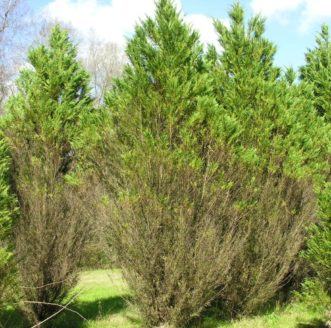
Leyland cypress, X Cuprocyparis leylandii, is a large, extremely fast growing evergreen that has the potential to grow one hundred feet tall and fifty feet wide. It is able to grow in a variety of soils and temperatures. It grows best in full sun in a well-drained location, spaced at least twelve to fifteen feet apart. Two main types of fungus affect the root system. Phytophthora root rot is found in poorly drained soils and usually affects younger trees. Plants may become stunted with sparse foliage that turns yellow, purple or tan. Sometimes cankers or lesions are evident at the soil line. Armillaria root rot results from deteriorating woody materials like tree stumps that have been left beneath the soil. It spreads to newly planted root systems and eventually, the rest of the plant, causing decayed areas on roots and bark. Symptoms include stunted growth, dieback of stems and branches and gradual or sudden death. Mushrooms may be present at the base. Pathogens of both types of fungus can remain in the soil even after the plant is removed. Poorly drained soils can spread the disease to plants nearby.
Three additional types of fungus affect portions of the plant above ground. Seiridium canker can be identified by dark oval lesions on stems and branches. Multiple cankers can form causing dieback. Needles will easily fall by running a