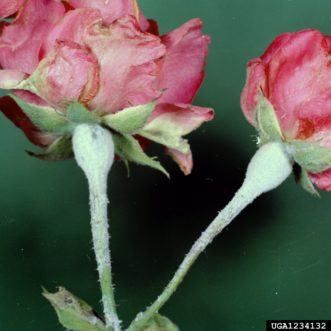
'Tis the season. Powdery mildew is back, particularly on ornamentals like roses and crape myrtle. It is a common occurrence in spring as the weather warms. Unlike many other fungal diseases, powdery mildew does not require moisture on the surface of a plant to infect it or to reproduce. However, certain conditions do play a crucial role in its onset and spread. As the saying goes, 'it ain't the heat, it's the humidity'.
Powdery mildew is not a singular disease, but a group of diseases caused by several closely related fungi. It is common among lots of plants, but different species of fungi have a limited host range. Powdery mildew on phlox may not be the same type that affects vegetable plants like squash. Spores produced in spring are dispersed and come into contact with a suitable host. When environmental conditions become favorable, these spores are spread by wind and rain to other plants. High levels of humidity are required and the disease becomes more problematic when days are cool and nights are warm and humid. Temperature is less of a factor as the disease begins to decline during summer heat. And we all know we can have some summer heat around here.
A symptom commonly associated with powdery mildew is a grayish-white substance visible on leaves and stems and sometimes on flower petals. As the
fungi develop over the plant surface, a general decline in the health and vigor of the plant may occur. Leaves can curl and become dwarfed or distorted. The disease may cause flowers to develop abnormally or they may fail to open.
Powdery mildew is favored by cool, moist, shady conditions. If possible, choose resistant varieties of plants. Locate susceptible plants in sunny areas with good air circulation. Avoid excessive fertilization or overirrigation that will stimulate new growth which is most affected. Prune out infected plant parts before the disease has a chance to spread. The disease can overwinter, so rake up and destroy plant debris to lessen the chances of it redeveloping next spring. If the use of fungicides should become necessary, read the label to ensure it can be applied on your specific plants. Follow label directions carefully as some fungicides should not be used above certain temperatures. To read more on powdery mildew, go to hgic.clemson.edu/factsheet/powdery-mildew/
It is time for powdery mildew to rear its ugly head. It is usually not considered a fatal disease, but considerable damage can occur if it is severe enough. Preventative measures like proper location and light requirements are more effective than curative ones. Soon we will begin to feel that summer heat and powdery mildew will be on the wane. If you were lucky enough to have avoided it this spring, you can look for it again when the weather begins to cool in late summer and early fall. 'Tis the season, part ll.
Gail Griffin is an Extension Master Gardener Volunteer with North Carolina Cooperative Extension in Lee County.