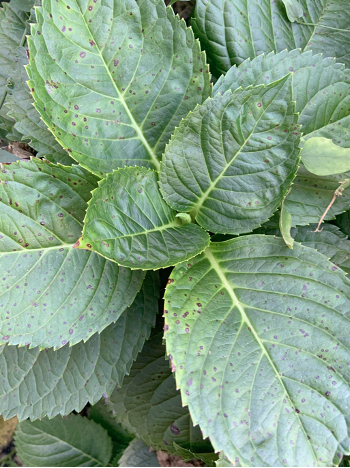
Are you seeing spots on your hydrangea leaves this fall? Fungal leaf spot diseases are the most active during wet weather, and hydrangeas are particularly susceptible to several different leaf spot diseases that favor moist weather.
Many of the leaf diseases that we see in the fall are actually the result of infections that happened in the spring and expanded as late summer rains spread them from the older bottom leaves up through the plant’s new top growth.
Fungicides at this point won’t really do a whole lot. The infected leaves will still have spots until they fall off in the winter. Watering techniques will help in reducing the spread of the fungal spores. Avoid getting the leaves wet by using drip irrigation instead of overhead sprinklers, and watering early in the morning so drying can occur when the sun reaches the plant. It is also helpful to remove infected leaves to get rid of the source of the inoculum so the spores can’t spread. Remove and dispose (not compost) of the leaves that fall on the ground or that remain in the bush during the winter to limit the disease spores from the previous year.
Fungicide protection in the spring can help the new, tender leaves resist infection, especially in young plants. Fungicides containing chlorothalonil, mancozeb, or thiophanate-methyl are most effective when applied prior to the first sign of leaf spots. Reapplying every 10 to 14 days may be needed to prevent these diseases. Be sure to follow the label for application rates and safety precautions.
Another important plant management practice is the concept of “The Right Plant in the Right Place”. Before you even plant the shrub, be mindful of managing the stress it will have to endure in that location. Stress can make living things weaker and more susceptible targets for problems. Start with gathering the right “reconnaissance”. The soil is like a plant’s pantry. What’s in it? Take a soil sample up to the NCDA Agronomics Lab at least every three years so you have updated information and recommendations for pH and fertility. From the beginning of April through the end of November there is no charge to NC residents. Your local N.C. Cooperative Extension office can help with providing the collection boxes, forms and sampling directions to you.
Next, select shrubs with disease resistance built in. Unfortunately, many of the popular varieties, especially when stressed with too much sunlight, are more susceptible to leaf disease. For more information about cultivars with disease resistance take a look at the Cornell University’s publication Disease and Insect Resistant Ornamental Plants: Hydrangea.
Amanda Wilkins is the Horticulture Agent for N.C. Cooperative Extension of Lee County.