This article was written by Matthew Clay, 2021 NCSU Summer Intern for North Carolina Cooperative Extension in Lee County.
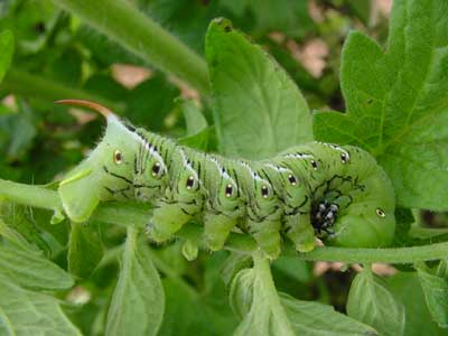
Hornworms feed typically on solanaceous crops, which include tomatoes and tobacco. There are two species of hornworm that can be found in North Carolina: the tobacco hornworm (Manducta Sexta) and the tomato hornworm (Manduca quinquemaculate). Damage caused by each one is similar. There are seven diagonal stripes on the sides of the tobacco hornworm, and its horn is usually red, while the tomato hornworm has V-shaped white markings on its sides, and the horn is frequently black.
In June, overwintering adults will emerge from pupae as moths. A moth can lay up to 2,000 eggs and will lay around five eggs per plant visit, which typically happens at dust. Eggs are light green and turn white right before hatching, which takes about four days. One can check for eggs by checking the underside of the leaves. Once the larvae emerge plant destruction will occur. Defoliation of leaves is the most common damage, but fruit damage of tomato plants can also occur.
With our climate in North Carolina, three generations of hornworms can occur during the season with pest pressure being the highest in July. Frequently check your plants to determine if hornworms are present. Look for black droppings on leaves and observe for signs of leaf and fruit damage as an indication if a hornworm infestation has occurred.
Hornworms are naturally controlled by the braconid wasp and can be easily recognized from the white pupae attached to the Hornworm. One should not remove these hornworms if found on a plant to promote natural predation. During