This article was written by Gail Griffin, Extension Master Gardener Volunteer with North Carolina Cooperative Extension in Lee County.
As summer approaches its midway point, many of our landscape plants are beginning to show wear and tear from excessive heat and periods of overly dry or overly wet weather. Some start to experience a decline in bloom production in preparation for the upcoming change to another season. However, there are some plants that are just now hitting their stride. Now is their time to shine, and Joe-Pye weed is one of them.
Joe-Pye weed, Eutrochium spp., is one of our native perennials that blooms from late summer to early fall. It is named after Native American healer, Joe Pye, of the Algonquin tribe near the Massachusetts Bay colony. His use of this plant in medicinal extractions helped treat various disorders and diseases, most notably Typhoid fever. A member of the daisy family, this wildflower grows in thickets along roadsides, in meadows and in highway ditches.
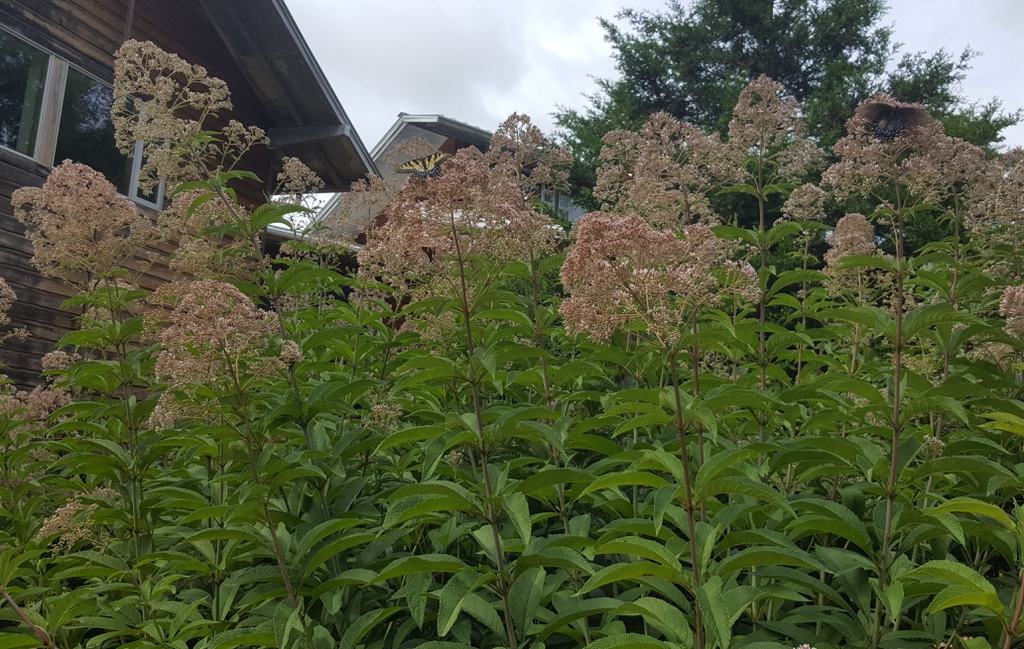
Also known as Queen of the Meadow and feverweed, Joe-Pye weed usually grows from 5 to 7 feet, but can reach 10 to 12 feet in height. Pink-purple fuzzy flower heads tower above leaves that whorl around reddish colored stems. The rounded
panicles may be 5 to 18 inches in height and width. It is best grown in moist soil in full sun to part shade. Once established, it can be more tolerant of dry conditions, but may show signs of leaf scorch after prolonged dry spells. Height is determined by soil conditions, light and moisture. For more compact growth, they can be pruned back by 2 feet in height in mid-May or early June, or you can choose a shorter cultivar.
The mildly fragrant blooms attract a host of insects and pollinators. These include the zebra, black and tiger swallowtail butterflies, fritillaries, moths, skippers, honey bees, hummingbirds, and wasps. Birds are also drawn to seed heads in the fall. These plants are deer and rabbit resistant. Formed in clumps, divisions can be made in fall by separating the crown and roots after the plant becomes dormant, or seed can be collected in late September and sown directly into the soil. Prune to 6 to 8 inches in late winter or early spring before new growth begins.
Because of its height, Joe-Pye weed is an excellent choice for the back of a border, along a fence line or in naturalized areas. In rain gardens, it is able to accept and collect runoff from lawns, roofs and driveways and slowly release it into surrounding soils. It is most effective in mass plantings, but can be used in meadows, butterfly gardens, pollinator gardens, and in native settings. It can provide a good neutral background for showy flowers and shrubs that bloom in early spring or summer. But come late summer, good old Joe-Pye weed can become a show stopper itself. For more information, go to the Clemson factsheet on Joe-Pye Weed.
Gail Griffin is an Extension Master Gardener Volunteer with North Carolina Cooperative Extension in Lee County.