This article was written by Gail Griffin, Extension Master Gardener Volunteer with North Carolina Cooperative Extension in Lee County.
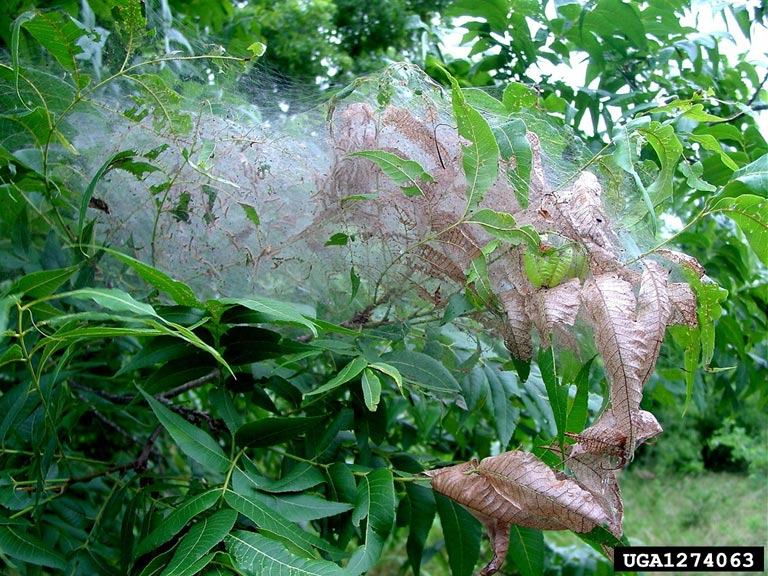
Those pesky fall webworms are making their rounds in our landscape again. The webs of these native insects can be found on hundreds of species of trees and shrubs. In our area, trees such as sourwood, persimmon and pecan are mostly affected. Unlike eastern tent caterpillars that build their webs in spring near the trunks of trees, fall webworms locate their webs on the ends of branches.
Fall webworm, Hyphantria cunea, over winters in mulch and soil as pupa surrounded by a cocoon. It emerges in spring as a snow-white moth. After mating, females lay eggs (up to 900) on the undersides of leaves. They hatch into tiny, light colored caterpillars that begin feeding on leaves, usually between the leaf veins and start to form their web as protection from predators. As they mature, they grow into dark, 1 1/2 inch caterpillars and begin to consume the entire leaf. Webs can contain hundreds of caterpillars and expand as more and more leaves are needed for these voracious feeders. After 4 to 5 weeks of feeding, they crawl down to the ground and pupate in the soil where they will spend the winter months. The webs remain in the tree until they are weathered away.
Because of the timing of infestations of fall webworms, they rarely cause any real damage. Trees have had time to store food before the caterpillars become abundant in mid to late summer. The unsightly webs contain leaf residue, waste material and shed skins from the process of molting. Probably some nice digs if you are a webworm. If controls are necessary, tear open the webs if they are