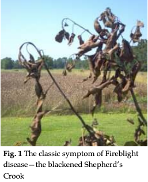
Fire Blight is a destructive, highly infectious, and widespread disease caused by the bacterium Erwinia amylovora that attacks plants in the rose family (lots more than only the rose members), which includes trees and shrubs in orchards, nurseries, and landscape plantings.
Initially, the disease often enters the tree through natural openings, especially flowers and wounds in the spring. It can be spread from diseased to healthy plants by rain, wind, and pruning tools. It can kill or disfigure a tree or shrub, depending on the susceptibility of the host and weather conditions.
How can you recognize this problem? The first symptoms usually start with the blossom appearing water soaked then drooping and browning. The disease continues growing down through the twig, killing as it moves systemically. Cankers form at the base of the dead areas on the woody plant tissue. Bacterial ooze may leak from cracks along canker margins or through pores in the bark called lenticels. This bacterial ooze can attract bees and other insects who then help spread the disease to healthy plants. The bacteria spread rapidly through the plant tissue in warm temperatures (65°F or higher) and humid weather.
Preventive spraying in early spring with streptomycin or copper-based fungicides is possible in a commercial orchard setting. However, for most homeowners the cost and effort is not reasonable. Trees need to be sprayed at a 3-to-4-day interval during bloom and the entire leaf canopy must be treated for control.
On pear, the killed twigs/branches are black-looking while the killed tissue on other rose family plants will be brown to chocolate brown in color. Often, but not always, the tip of the twig/branch curls back on itself thus forming a "shepherds crook" appearance.