This article was written by Matthew Clay, 2021 NC State University Summer Intern for North Carolina Cooperative Extension in Lee County.
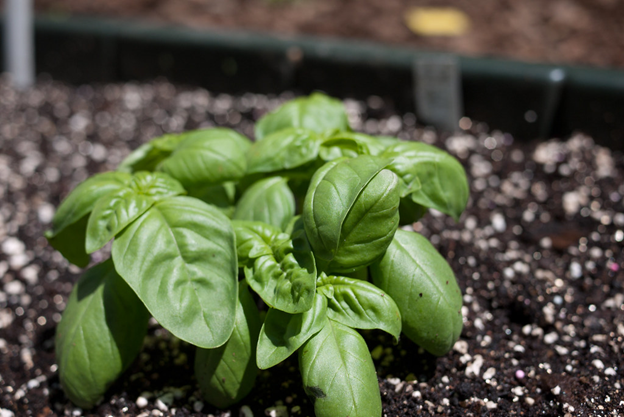
Basil is a great culinary herb that can easily be grown at home. It is very simple to start from seed, and the leaves can be harvested off the same plant all season long in the summer. A basil plant likes to be grown in full sun with good draining soil that
is also moist. There are many ornamental varieties that have different colored foliage or have miniature growth habits. Thus, it adds texture and color to your landscape. Furthermore, the older basil plants will bloom and serve as excellent attractors for many bees, butterflies, and other pollinators. Cuttings from basils can be easily rooted to add more basil to your garden. If you are short on growing space, basil can be planted in containers instead of in the ground.
Sweet basil (Ocimum basilicum) is the most common of the basils grown. Its leaves can be used in many culinary dishes. Cinnamon basil is another cultivar of basil that has leaves with a distinct cinnamon-like flavor. Greek Dwarf is another cultivar of basil that is more compact, but it still provides the same flavor as sweet basil. Siam Queen, also known as Thai basil, is a cultivar that has a slightly spicy taste that resembles licorice. Purple Ruffles is a purple-colored basil that has the same taste of sweet basil while providing your garden an extra pop of color. It also grows to be about the same size as sweet basil. Holy basil (Ocimumtenuiflorum) has flowers that are shorter lived than sweet basil, and its spicy leaves provide a flavor of mint, clove, and basil. Furthermore, the African Blue Basil is a hybrid of two different basils. It is edible, but the flavor is not as appealing. Therefore, most people grow it for its pink flowers and pollinator attraction. For more information about basils visit the North Carolina Extension Gardener Plant Toolbox.
Matthew Clay is the 2021 NC State University Summer Intern with North Carolina Cooperative Extension in Lee County.