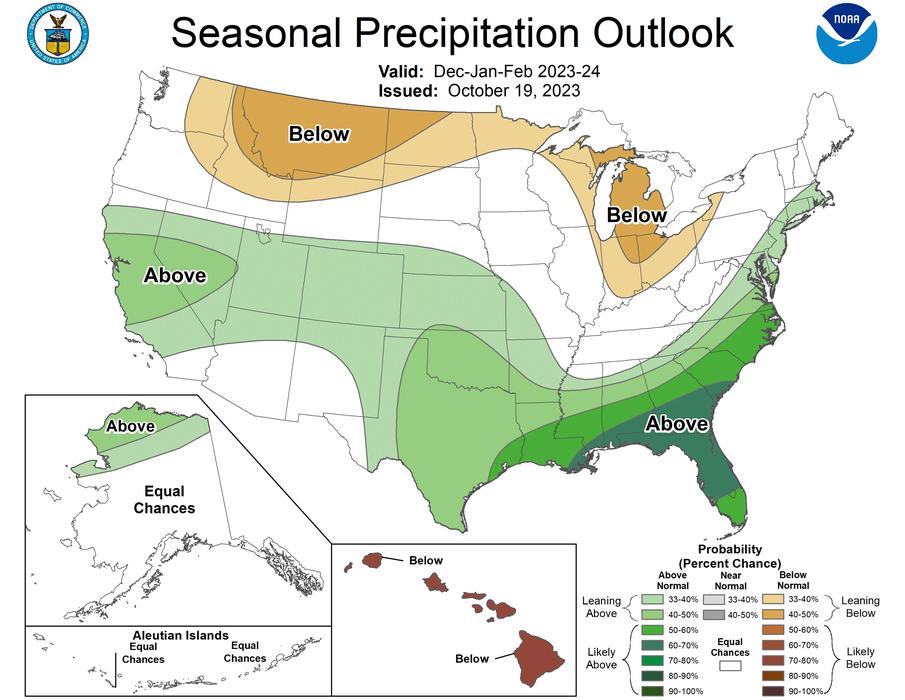
Gardeners and farmers know the importance of checking the weather forecast, and recognize how weather and climate patterns affect their plants and crops. Understanding how weather and climate patterns can help gardeners and farmers predict how to control pests and diseases, and look ahead to water scheduling. Our long, cool spring in 2023 delayed flowering and lush growth in our gardens and caused some unusual disease issues, and the long drought through the summer and fall made us all very nervous for our plants and crops. Thanks to the National Weather Service’s Climate Prediction Center, important signs are already available to help in the decision process for garden management options in 2024.
El Niño conditions are predicted for our winter this year through the Northern Hemisphere. During El Niño, the trade winds in the Pacific Ocean calm down and cause the warm waters of the Pacific to move East. According to NOAA, “the
warmer waters cause the Pacific jet stream to move south of its neutral position. With this shift, areas in the northern U.S. and Canada are dryer and warmer than usual. But in the U.S. Gulf Coast and Southeast, these periods are wetter than usual and have increased flooding.” The Gulf Coast and Southeast, in many places, have been experiencing droughts, so these winter storms will actually help alleviate some of the drought conditions.
The North Carolina Climate Center at NC State University expects near- to above-normal temperatures on average this winter, but with the potential for at least brief cooler stretches by January or February.
Warmer weather during our Winter season can allow pests and diseases to survive, if not flourish. Just think back to years where it never really got cold. Did you notice how many more pest insects you had? Were you pulling out the mosquito spray just to sit on your back porch at New Years? Cold weather is critical in our temperate climate to keep plant and animal populations in check.
Very cold weather acts as a reset button from one growing season to the next. Freezing temperatures kill volunteer weeds that can harbor pests. Cold soil conditions check the reproduction and development of plant-parasitic nematodes. Wet conditions help the breakdown of debris where pests and disease pathogens can overwinter. With all of these benefits, it is important to also recognize that saturated soils and consistently moist weather conditions can also promote fungal pathogens. Additionally, there are some plants that we traditionally grow in our gardens that can suffer from weather that is “too wet”.
As you look over the seed and garden catalogs that fill up your mailbox this season consider selecting resistant varieties for effective disease and pest management. There are a number of varieties now available with increased resistance to important diseases that, when used along with good garden management techniques, can protect your vegetable garden and perhaps reduce the need for the use of chemical pest control.
Amanda Wilkins is the Horticulture Agent for North Carolina Cooperative Extension in Lee County.