The Garden as a Teacher: Lessons from the McSwain Center’s Front Bed Transformation
A garden is a teacher, but it is also a snapshot in time.
Because a garden changes every single day, managing a landscape means constantly living in the past, present, and future. We look to the past to learn from what failed, work in the present to weed and water, and dream in the future as we anticipate how plants will mature. Through it all, we use our human desire for control to create a sense of place and purpose.
If you have visited the McSwain Extension Center recently on Tramway Road, you may have noticed a dramatic shift at our front entrance. That change was no accident—it was a lesson in garden design and patience in action!
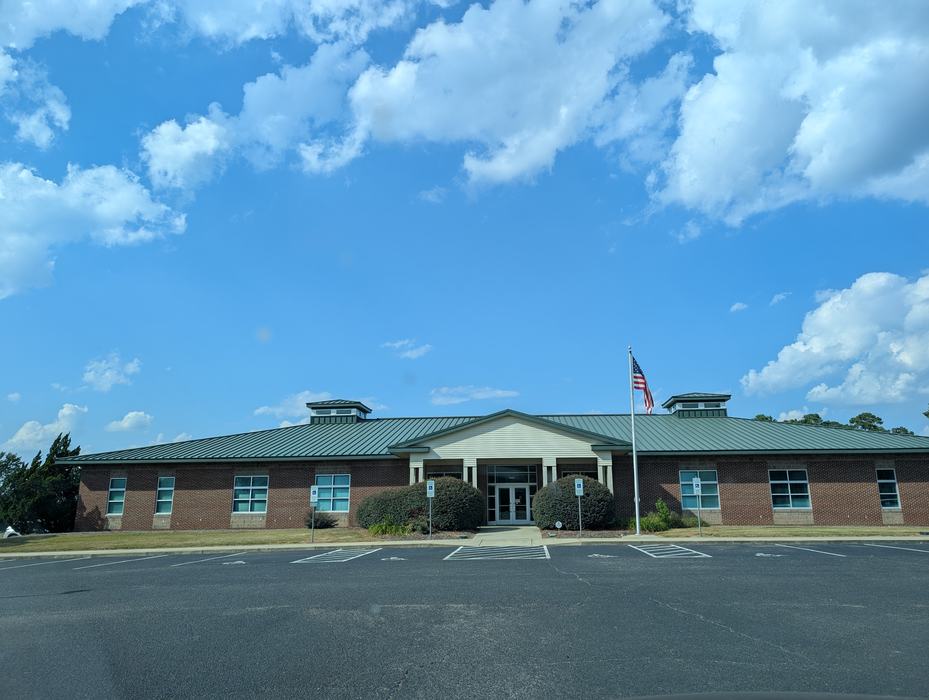
The McSwain Center had imposing Chinese Fringe Flower shrubs, Loropetalum chinese, along the front walk. It made the building seem uninviting and was a constant maintenance need to keep it sheered and out of the path. Photo by Amanda Bratcher
Out with the Old: Leaving the "Barren Wasteland" Behind
For years, the front of the McSwain Center was, frankly, a sterile landscape. A few years before I started in 2022, the bed had been gutted of its overgrown shrubs, leaving behind a barren stretch of black landscape fabric, pine bark chips, weed-infested daylilies, and two massive, imposing Loropetalum chinense, Chinese fringe-flower shrubs.
Former administrative assistant Rhonda Gaster and I used to go back and forth constantly about those shrubs. They had grown so large and had to constantly be sheared by county workers to just keep them barely out of the path. They hid our beautiful building, blocked natural light, and felt uninviting to visitors walking up the front walkway.
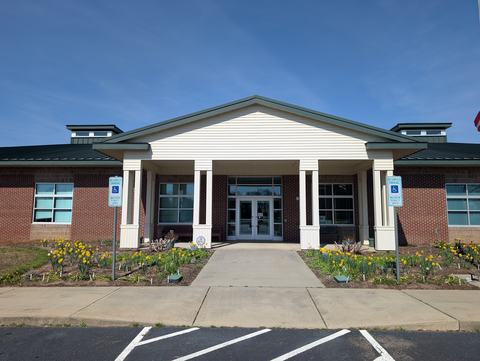
We wanted the McSwain Center to be a warm, welcoming gateway where people come to learn about agriculture, horticulture, and home gardening—a site that mirrors the vibrant energy of our Pollinator Haven Garden behind the building.
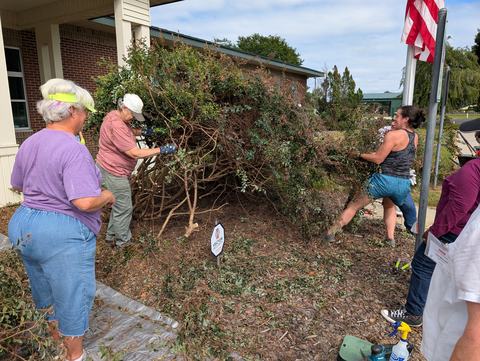
So, in September 2025, we took action. The Extension Master Gardener Volunteer Class of 2025 kicked off a class session by hacking up the shrubs as a team to demonstrate the amount of effort it takes to remove shrubs like that. Another EMG volunteer came back with a truck and chain to remove the stumps. Those towering Loropetalums were conquered after more than a dozen hours of work.
Garden Transformation in One Year
EMG Class of 2025 removing Loropetalum
The EMG Volunteer Students of the Class of 2025 tackled one of the Loropetalum shrubs during one of their class periods to learn about pruning and labor hours related to maintenance. Photo by Amanda Bratcher
The EMG Volunteer Students of the Class of 2025 tackled one of the Loropetalum shrubs during one of their class periods to learn about pruning and labor hours related to maintenance. Photo by Amanda Bratcher
Clean Slate After Shrub Removal
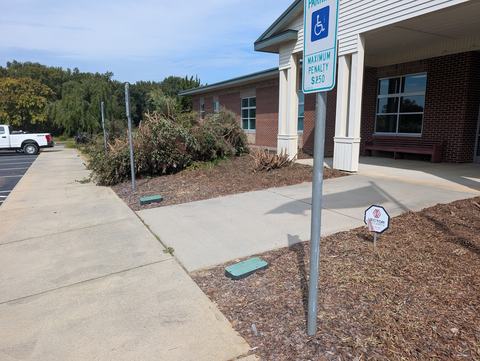
The front beds looked empty after the Loropetalum were peeled back, but despite it having taken almost 20 man-hours to remove all of the shrubs, the work was just getting started! Photo by Amanda Bratcher
The front beds looked empty after the Loropetalum were peeled back, but despite it having taken almost 20 man-hours to remove all of the shrubs, the work was just getting started! Photo by Amanda Bratcher
Garden with woodchips and landscape fabric removed
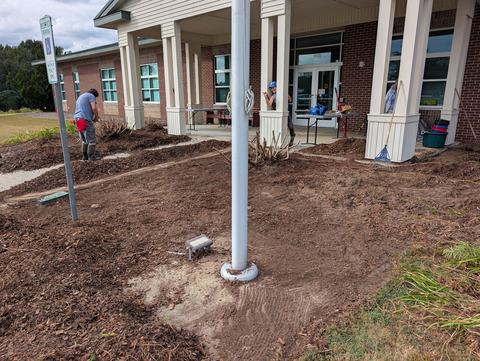
This is the bare soil after the landscape fabric has been removed and the pine bark chunks have been removed. It is important to never use landscape fabric around living plants. Photo by Amanda Bratcher
Garden with woodchips and landscape fabric removed
This is the bare soil after the landscape fabric has been removed and the pine bark chunks have been removed. It is important to never use landscape fabric around living plants. Photo by Amanda Bratcher
Clas participant volunteer to help with garden renovation
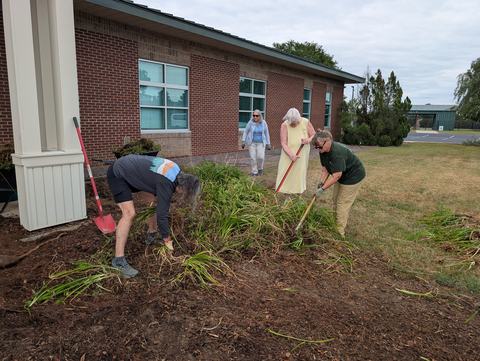
Brave class participants tackle woodchips, landscape fabric and plant roots as the bed renovation begins in the front of the McSwain Center in October 2025. Photo by Amanda Bratcher
Clas participant volunteer to help with garden renovation
Brave class participants tackle woodchips, landscape fabric and plant roots as the bed renovation begins in the front of the McSwain Center in October 2025. Photo by Amanda Bratcher
Freshly planted Garden Beds in October 2025
The McSwain Center looked more exposed after the final small plant was planted more than a month after the project initiated, but the small plants also held a lot of promise. It is easier to get small plants established than large plants. Photo by Amanda Bratcher
The McSwain Center looked more exposed after the final small plant was planted more than a month after the project initiated, but the small plants also held a lot of promise. It is easier to get small plants established than large plants. Photo by Amanda Bratcher
Front of McSwain Center after Planting in October 2025
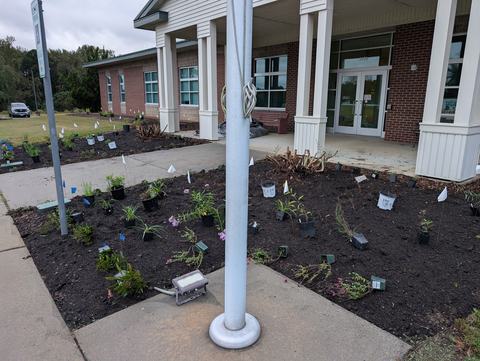
The front view of the McSwain Center after planting the new herbaceous perennial plants in October 2025. Photo by Amanda Bratcher
Front of McSwain Center after Planting in October 2025
The front view of the McSwain Center after planting the new herbaceous perennial plants in October 2025. Photo by Amanda Bratcher
Daffodils in March 2026
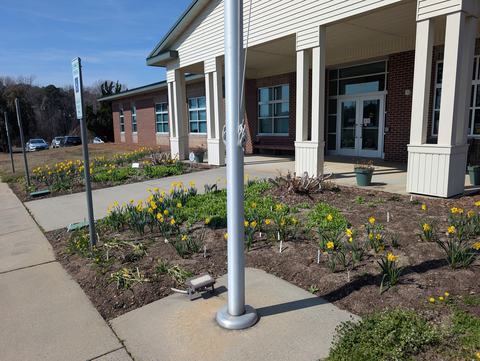
Only four months after the initial install, the daffodils poked through with the promise of spring for the McSwain Center Front Beds. We go so many comments on how lovely the daffodils were in the late winter and later when the poppies bloomed in the late spring. Photo by Amanda Bratcher
Only four months after the initial install, the daffodils poked through with the promise of spring for the McSwain Center Front Beds. We go so many comments on how lovely the daffodils were in the late winter and later when the poppies bloomed in the late spring. Photo by Amanda Bratcher
Front Garden Beds a Year Later, September 2026
The McSwain Center front bed features more than 30 different plants, mostly natives. Each side is mirroring the other, for the most part. Different design techniques, like bold lines and mass plantings, help give order to the space and balance the diversity. Photo by Amanda Bratcher
The McSwain Center front bed features more than 30 different plants, mostly natives. Each side is mirroring the other, for the most part. Different design techniques, like bold lines and mass plantings, help give order to the space and balance the diversity. Photo by Amanda Bratcher
The McSwain Center has a welcoming front garden a year later
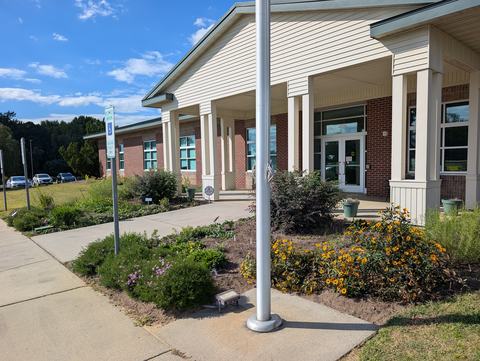
The McSwain Center Front Beds are more inviting, vibrant and diverse one year later. Photo by Amanda Bratcher
The McSwain Center has a welcoming front garden a year later
The McSwain Center Front Beds are more inviting, vibrant and diverse one year later. Photo by Amanda Bratcher
In with the New: Designing for Pollinators & Year-Round Interest
In October 2025, we hosted a series of hands-on garden design workshops to prepare the soil and plant the new bed from start to finish. Part of that soil prep was actually removing the old landscape fabric and pine bark chips, because neither of these materials are actually good for plants; and adding a 2” layer of compost to the top of the soil.
We selected a plant palette composed primarily of native, drought-tolerant perennials that offer staggered blooming windows throughout the year. There are more than 30 species in the Front Garden now! To guarantee an early spring welcome, the Extension Master Gardener Volunteers sponsored and planted nearly 500 mixed daffodil bulbs!
Now, exactly one year later, the front garden is putting on a magnificent fall show:
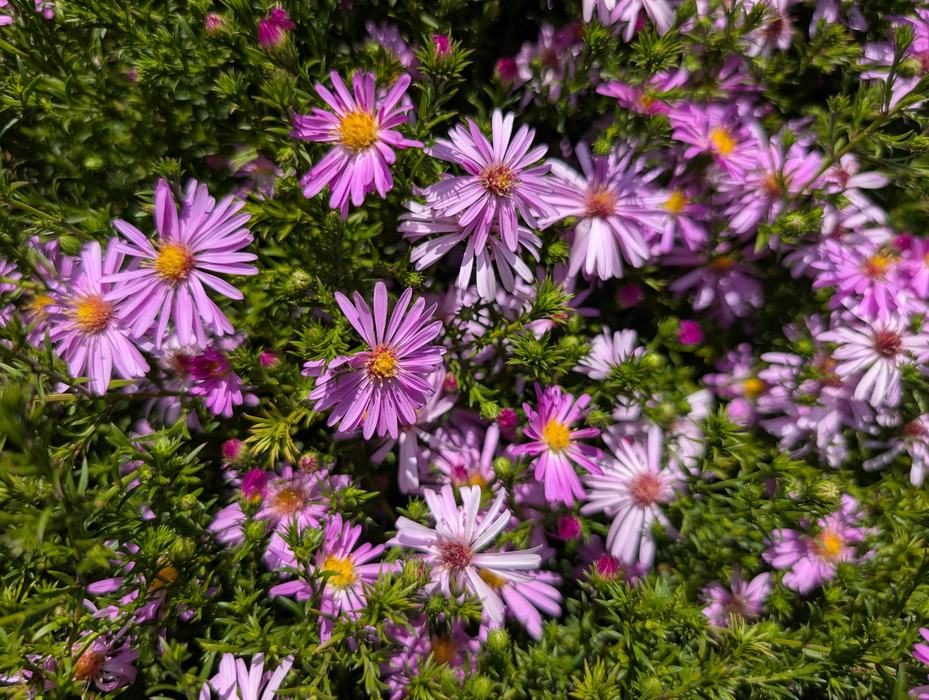
New York Asters (Symphyotrichum novi-belgii‘Purple Dome’): Appearing like tight, compact shrubs, these herbaceous perennials are beginning to explode with vibrant purple flowers right now. Bumblebees and flies are all over them.
Bleeding Hearts False Sunflower (Heliopsis helianthoides var.scabra 'Bleeding Hearts'): This tough seed strain features rich yellow blooms with fiery red-orange centers. They have bloomed continuously through our brutal summer heat and continue to flower into the fall. They volunteer from seed sometimes. The plants in the front bed are seedlings from the main Pollinator Haven Garden.
Blazing star (Liatris ssp.): We have three different species of blazing star in the front beds. Some that will flower in the spring, and other that will flower in the summer and fall. This is a great species to plant among other perennials to provide punctuation in the Garden.
Aromatic Aster (Symphyotrichum oblongifolium 'October Skies') & Cup Plant (Silphium perfoliatum): Replacing the bulky evergreen shrubs along the building face, these low-maintenance perennials frame the brick walls between our windows with yellow flowers in the summer and purple flowers in the fall. In winter, they hold a subtle semi-evergreen footprint, but in late summer and fall, they deliver bold structural color without blocking the architecture. We have seen new birds and pollinators in the front of the building that we’ve never seen before.
The Ultimate Design Lesson: Leave Room to Grow!
When we installed this garden in late 2025, almost everything was planted from modest 4-inch nursery pots. Initially, there was plenty of bare ground between the tiny plants—a sight that makes many homeowners panic and overcrowd their beds! Just 12 months later, those small 4-inch starts have expanded into lush, full mounds 1 to 2 feet wide and tall and there is very little bare ground left.
This is the ultimate lesson in garden planning: think ahead and trust the growth process. It can be tempting to pack plants tightly together on day one to achieve an instantly "finished" look, but leaving proper spacing saves you money and hours of tedious pruning, editing, and thinning down the road.
A garden is never truly finished—it grows, shifts, and teaches us something new every season. We invite you to swing by the McSwain Center, walk the front path, and see what's blooming!
New York Asters, Symphyotrichum novi-belgii ‘Purple Dome’, are starting to flower in the McSwain Center Front Beds in late September 2026. This year they are 1'x1' perfect mounds that almost look like shrubs. Photo by Amanda Bratcher
Interested in becoming an Extension Master Gardener Volunteer in Lee County?
We are recruiting for the EMG Class of 2027 in Lee County! We have two interest meetings coming up in October: Friday, October 16, at 10 a.m. at the McSwain Center, and Tuesday, October 20, at 6:30 p.m. at the Sanford Agricultural Marketplace. Come learn about the Program, what we’re up to in Lee County and meet up with other gardeners and volunteers.
Get In Touch!
Amanda Bratcher is the horticulture agent with N.C. Cooperative Extension—Lee County Center. Have questions about garden design, native plant selection, or becoming an Extension Master Gardener Volunteer? Reach out to our office at 919-775-5624 or visit our center at 2420 Tramway Road in Sanford. Find upcoming landscape design workshops and community classes on our events page!