Planning for Late Winter Color: Order Bulbs Now, Plant in December
(Updated: Sept. 29, 2026, 5:50 p.m.)
A garden is always an act of faith, existing simultaneously in the past, present, and future. While we are currently harvesting late summer produce and enjoying fall blooms, a gardener's mind must be looking ahead to late winter.
Daffodils are a cherished late-winter favorite here in Lee County, often serving as our first sign that spring is on the horizon. But if you want to enjoy brilliant sweeps of yellow, white, and orange across your landscape in February, March, and April, you have to do the legwork now: order in the fall, and plant in December.
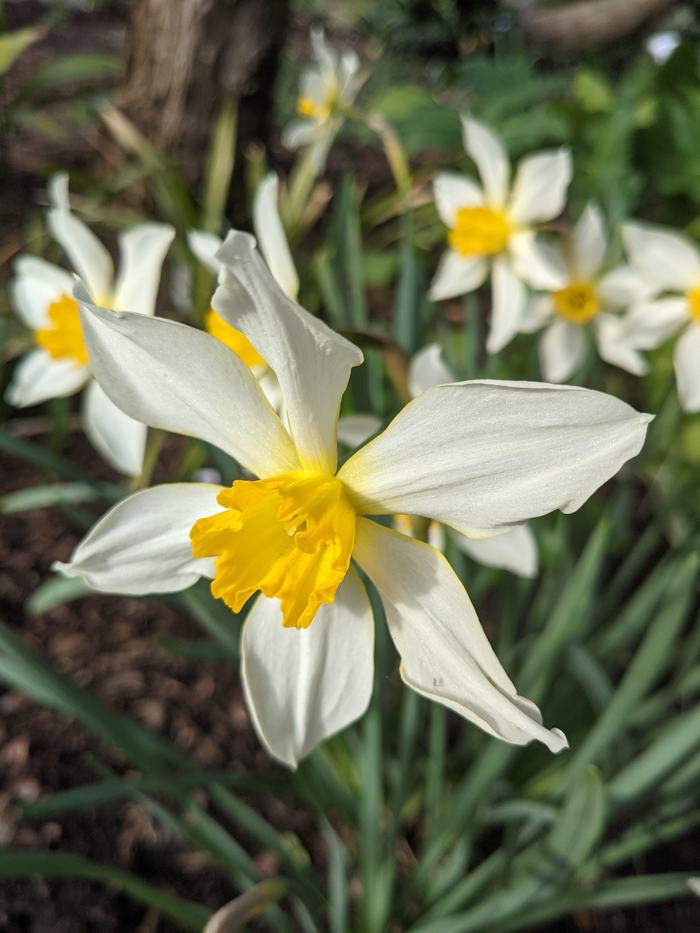
The face of a daffodil can make you smile. There are two parts to the flower: the cup and the perianth, or the petal-like whorl of the flowers. Photo by Amanda Bratcher
Why Order Bulbs in Early Fall?
Bulb companies begin sending out print and digital catalogs in August and September. It can feel strange to flip through pictures of spring flowers while sweat is still dripping off your nose in early autumn! However, there is a good reason for this schedule.
Many major bulb suppliers are located in the Midwest, northern states, or import their stock directly from Europe. In cooler climates, the ground freezes much earlier, so suppliers must ship bulbs before northern soils lock up.
By ordering early in the fall, you secure the best varieties before popular strains sell out. When your shipment arrives at your doorstep, you have to keep those bulbs healthy until our southern soils cool down enough for planting.
Inspection & Storage: Protecting Your Investment
When your box of bulbs arrives, treat it like live plant material—because that is exactly what it is!
Open your package right away and examine every bulb. Discard or return any that are soft, mushy, moldy, or diseased. Never plant a diseased bulb in your garden. Doing so can contaminate your soil and ruin neighboring plants for years to come. Most reputable companies will gladly offer a refund or replacement if you report damaged arrivals promptly.
Until it is time to plant in December, store your bulbs in a cool, dark, clean location. If you chill them in the refrigerator, keep them away from ripening fruits like apples and bananas. Ripening fruit produces ethylene gas, which will kill the tiny, undeveloped flower bud dormant inside the bulb!
Do not peel off the papery, brown skin (known as the tunic). This natural outer layer protects the delicate fleshy scales from drying out, physical injury, and fungal pathogens.
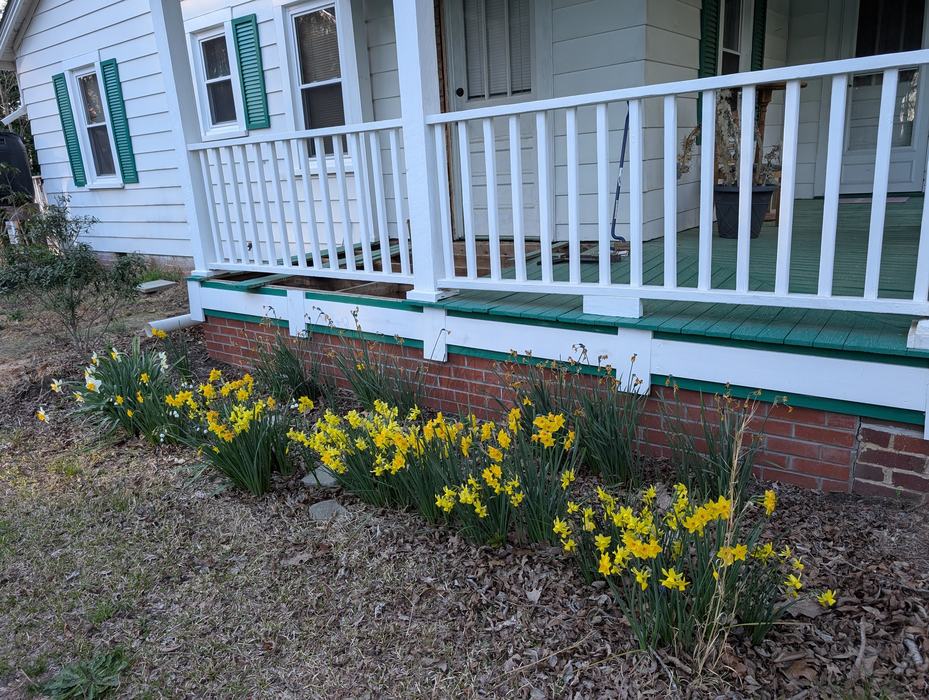
A mass of daffodils can accent a porch nicely in the spring. Photo by Amanda Bratcher
December Planting: Rules for Success
In Lee County, the ideal time to tuck daffodil bulbs into the soil is December. The air temperature has dropped, but the ground remains workable.
Plant daffodil bulbs with the pointy tip facing up and the flat, fibrous root plate facing down. As a general rule, plant the tops of the bulbs about 3 to 4 inches below the soil surface (roughly 2 to 3 times the height of the bulb itself).
If you are starting a new bed or expanding an existing drift, aim to plant five to six bulbs per square foot. Planting in odd-numbered clusters or sweeping drifts looks far more natural than planting in straight, rigid lines.
Always use clean trowels and tools to prevent transferring soil-borne diseases between beds.
Don't Forget Dormant Planting: The Case for Peonies
Late fall and winter aren't just for bulbs—it is also the best time to plant other cold-hardy perennials, especially peonies!
Most people fall in love with peonies in May when they see them flowering in full glory at garden centers. Naturally, they buy the potted, blooming plant and put it in the ground. Unfortunately, planting a peony in full bloom during warm weather subjects it to severe transplant shock. The plant will often stall its growth and refuse to flower for two or three seasons!
It is a much harder sell to convince someone to buy a bare-root peony crown or dormant rhizome in late fall because it looks like a clump of dry roots. However, planting peonies while they are completely dormant allows their root system to settle into the soil all winter long without the stress of supporting heavy leaves and flowers. Come spring, a dormant-planted peony will establish faster, grow stronger, and bloom far more reliably.
Fall is for Planting (and Planning!)
Enjoy the seasonal shift from our heat to something cooler and more bearable, but also don't forget your dreams of your garden when it turns from cool to warm again. There is always something more to look forward to in the garden, if you plan ahead and plant appropriately.
Get In Touch!
Amanda Bratcher is the horticulture agent with N.C. Cooperative Extension—Lee County Center. Have questions about selecting bulb varieties, soil preparation, or perennial care? Reach out to our office at 919-775-5624 or visit our center at 2420 Tramway Road in Sanford.